
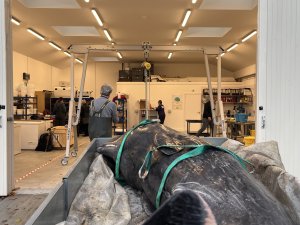
The Scottish Marine Animal Stranding Scheme (SMASS) has been in operation since 1992. It is part of the Cetacean Strandings Investigation Programme (CSIP) and is funded by the Scottish and Westminster governments. SMASS collects a wealth of relevant data and a systematic approach to the surveillance of Scotland’s marine species by collating, analysing and reporting data of all whales, dolphins and porpoises seals, marine turtles and basking sharks that strand on the Scottish coastline.
To make data more accessible and increase useability this project designed a web-accessible database for storage of key Scottish Marine Animal Stranding Scheme (SMASS) datasets. The web frontend includes a searchable interface and data visualisation of strandings cases and trends and the backend of the site is now integrated with the BeachTrack app for data integration and SMASS website for visualisations. The collection of this data allows for improved understanding of the health status of relevant species and reveals information about the potential risks they are facing. In 2025 the project extended to develop the pathology side of the database—to meet increasing demands for detailed post-mortem data capture, robust analysis, and evidence-based outputs for management and conservation.
At the same time, SMEEF was able to make a grant for enhancement of SMASS diagnostic and analytical capacity to better characterise contaminant burdens and understand the effects of ocean pollution on Scotland’s apex marine megafauna. By improving the precision, throughput, and scope of laboratory analyses, it enables more detailed, integrated assessments of animal health and environmental conditions.
In 2023 and 2025 SMEEF was able to provide total grants of £117,038 to support this work using resources from the Nature Restoration Fund.