
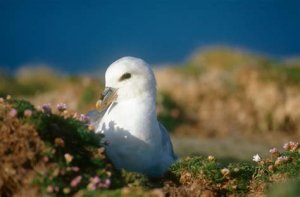
This project was two fold. The first part coordinated an international workshop, bringing together an international a community of interest group of experts within the field looking at Fulmar population. Together, this supported the identification of opportunities to improve monitoring and research efforts, so we can better understand the derivers behind the Northern Fulmar population decline.
The grant for this project supported all costs associated with the workshop, enabling international travel for in-person participation from fulmar experts throughout Europe.
As a result of the workshop and discussion, knowledge gaps identified by participants have been summarised into 12 main themes with improving demographic information for fulmars as the most identified knowledge gap, followed by reducing bycatch. The workshop allowed experts from across regions/countries to start conversations, with potential future collaborations identified during the designing of fundable research addressing knowledge gaps. All participants agreed to be added to a mailing list to allow sharing of updates and ideas and as a result a number of further opportunities for collaborations have already occurred.
The second part of the project facilitated increased understanding of the factors causing decline in fulmar numbers, through the purchase bespoke fulmar GPS tags and associated base stations to track the foraging movements of the fulmar that breed across St Kilda and Fair Isle sites.
The project grant supported costs towards the purchase of 40 bespoke GPS tags, two mobile base stations and two fixed base stations. The tags were designed to be far smaller than the recommended carrying weight that a seabird the size of a fulmar could carry which still included a number of sensors to support the date revival of the spatial overlap between fulmars and threats they may encounter at sea, and to assess flight heights. The base stations purchased are used to remotely download data from the tags whilst they are on the birds.
Tracking the foraging behaviour of the birds will enable NTS to understand far more about their interactions with challenges they’re experiencing. particularly factors driving the accelerating declines on St Kilda.
In 2025 SMEEF was able to provide total grants of £38,539 to support this work using resources from the Nature Restoration Fund.