
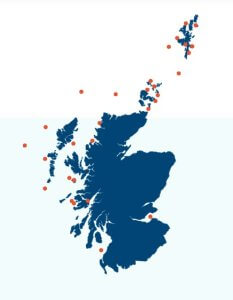
This project is two fold. The first aspect will deploy remote surveillance systems across 8 identified Scottish Islands (Ailsa Craig, Gruney, North Rona, Auskerry, Sule Sgeir, Swona, Sule Skerry and Monachs).
This will include the deployment of 20 trail cameras to support monitoring for early signs of invasive non-native mammals (INNS). This investment in remote surveillance can help to prevent an infestation and allow for fast action on incursions.
The second addresses the threat posed by invasive non-native mammalian predators to seabirds. All seabirds are ground and cliff nesters, meaning eggs, chicks and small adult species are vulnerable to predation, having evolved in environments without natural predators.
The Biosecurity for Scotland programme will work collaboratively with stakeholders to further the development of work outlined in the Scottish National Island Biosecurity Programme Plan, which in turn will contribute to priority biosecurity related actions contained in the Scottish Seabirds Conservation Action Plan.
The project will raise awareness of biosecurity and increase surveillance on and prevention of incursion to priority seabird islands, and further develop the Predator Free Certification scheme and develop national biosecurity guidance for sea users.
Their long-term management of Rapid Incursion Response hubs and the biosecurity volunteer programme will also be developed, along with their trails using a biosecurity dog.
In 2025 SMEEF was able to provide total grants of £148,929 to support this work using resources donated to SMEEF by businesses.