
Photo by ©Whale and Dolphin Conservation
ShoreWatch has developed a bespoke app portal that is transforming how citizen science data is collected, managed, and used. Designed for volunteers, the app streamlines data entry, improves accuracy, and provides real-time access to resources—even for watchers in remote coastal locations. It allows volunteers to log sightings directly from the field, access Shorewatch-specific guidance and support wherever they are. It has improved data management efficiency and has built volunteer confidence as it is used within the training process. It gives volunteers live access to the full ShoreWatch dataset, reinforcing their ownership of the data and connects users to the wider ShoreWatch network.
Using a web-app portal allowed WDC to work with ShoreWatchers, using ‘beta testers’ to trial adjustments before rolling them out more widely. This flexibility means it can evolve with the needs of the programme. Enhancements include:
- A countdown feature to celebrate the milestone of 1 million minutes (100K) of Shorewatching.
- Design adjustments to improve usability in cold weather, including larger buttons and integrated ID guides.
- New functionality to support the collection of interaction and disturbance data, contributing to partnerships with Police Scotland and the National Wildlife Crime Unit.
- Features to enable seal data collection using bespoke language and forms.
- Coordination of vessel data collection to align with the Scottish Vessel Project.
- A new ‘user request’ portal to support efficient onboarding of volunteers
The Shorewatch app portal has strengthened connections between volunteers and researchers and continues to grow as a vital tool in Scotland’s marine conservation efforts.
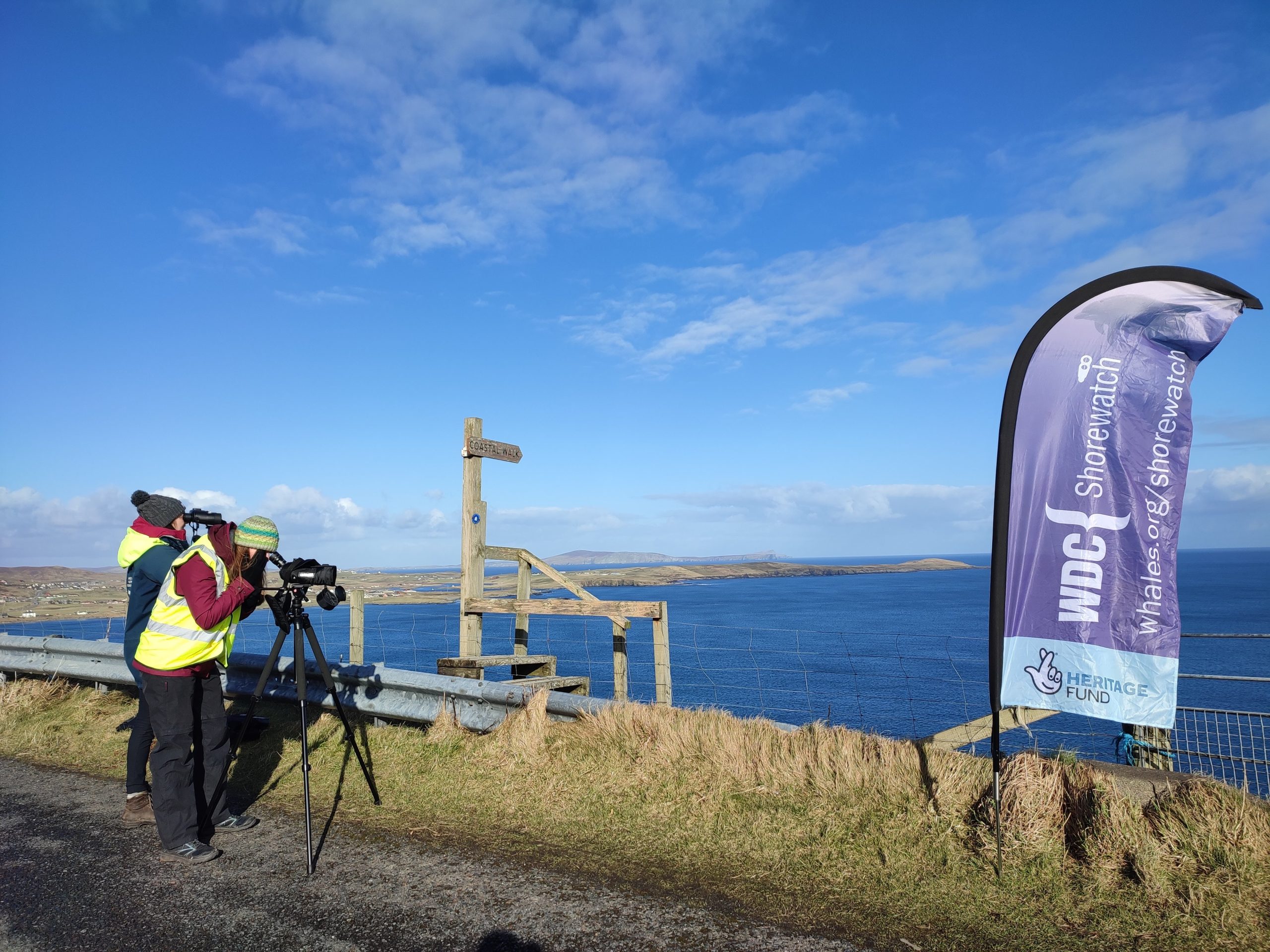
In 2021 SMEEF was able to provide a grant of £52,323 to support this work using resources from the Nature Restoration Fund.Scotland is home to a diverse group of whales, dolphins, and porpoises. In 2005, Whale and Dolphin Conservation (WDC) founded Shorewatch, a citizen science observation programme that now includes a mobile application to record sightings and since then more than 85,000 sightings have been recorded. WDC applied for a grant for valuable equipment, such as binoculars and telescopes, to enhance their Shorewatch programme and equip volunteers.
The enhanced data collection provided evidence towards the designation of the North East Lewis Marine Protected Area for Risso’s dolphins and the recently identified Important Marine Mammal Areas (internationally recognised as critical habitat) around Scotland. Shorewatch also contributes by recording disturbance data from both vessels and humans. Cameras purchased allowed coordinators to take high quality photos and videos of cetaceans for improved ID skills, they continued to be used in training and to add to the citizen science photo ID catalogue for Risso’s dolphins along the North East coast of Scotland and the Northern Isles.
“Ultimately this grant will help us to continue to support volunteers to collect increasing amounts of high quality, citizen science data on whales, dolphins and porpoises in Scotland to be used to fill welfare and conservation data gaps and be used in important marine planning and conservation decisions. This equipment will enhance community capacity to engage with their marine heritage and biodiversity, while simultaneously inspiring a movement of people committed to their protection.” Joseph Wood, Trusts & Grants Manager, Whale and Dolphin Conservation
In 2021 and 2023 SMEEF was able to provide grants totalling £83,419 to support this work using resources from the Nature Restoration Fund.
In 2025 SMEEF support for Shorewatch strengthened this community-led monitoring programme by facilitating investment in advanced optical equipment (e.g. binoculars, scopes, monopods). This improved optical performance has significantly strengthened the reach and effectiveness of the programme by increasing the kit available across multiple sites, something which has been particularly valuable during group training sessions. Through improved training opportunities, trainees become more skilled in observing key ID cues and behavioural signals – in order to distinguish between similar cetacean species at greater distances and under variable weather conditions.
In 2025/26, SMEEF was able to provide a grant of £9786 to WDC to support this work using resources from the Nature Restoration Fund.