
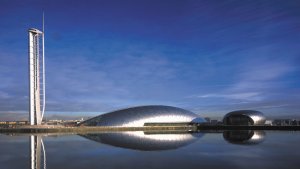
This project created a brand new floating estuarine habitat in the Canting Basin adjacent to Glasgow Science Centre. Using a versatile modular system it increased biodiversity and visual amenity and encouraged the community to engage with a future vision of the Clyde. The Canting Basin in the Clyde was transformed with the addition of three Floating Wetlands, spanning 200m², with over 2000 native plants and trees planted on the new platforms.
The nesting platforms have provided a habitat that has proven popular with local wildlife and interpretation boards and binoculars on the decking allow visitors to learn more about the history and natural history of the area and investigate the wetlands and the benefits they can bring. The School of Geographical & Earth Sciences at The University of Glasgow, are key collaborators on the Floating Wetlands project, carrying out a baseline survey of the Canting Basin ecosystem and creating a comprehensive monitoring and evaluation plan for ecosystem services and human nature interactions.
“This project would not have been such a success without the collaboration between ourselves and the School of Geographic and Earth Sciences at the University of Glasgow. The University has installed monitoring equipment and undertaken a baseline study of the biodiversity and ecosystem within the basin, allowing for future evaluation to be carried out to measure the impact of the project, and hopefully encourage similar projects to ‘green the grey’ in our cityscapes.”
In 2022 SMEEF was able to provide a grant of £256,114 to support this work using resources from the Nature Restoration Fund.