
Invasive plant species can seriously affect seabird populations, denying them access to breeding and nesting sites. Removal of these invaders at key sites is hugely important but can be a very difficult task given the inaccessible nature of the sites. RSPB and others undertake annual rounds of invasive species removal at sites across the country.
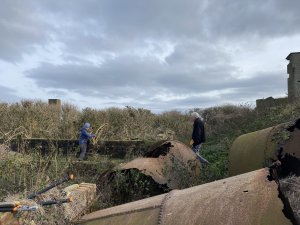
In this project Japanese knotweed was removed at RSPB Scotland’s Inner Clyde Reserve and Tree mallow and Elder was cut back at RSPB Scotland’s Inchmickery Reserve. The team were able to clear virtually all – approx. 99% – of the tree mallow from on the first trip, leaving only a couple of remaining plants which could be removed on the second trip. This was a very positive outcome.
On the second trip the team were able to remove significant amounts of elder, successfully opening up areas both for nesting seabirds and also making it easier for bird surveyors to move around the island. It was never the intention to remove all the elder, as some is needed to provide cover for species such as Eider. The new remote cameras will enable better understand of the levels of disturbance to the island and are helping with seabird monitoring.
In 2023 SMEEF was able to provide a grant of £3,738 to support this work using resources from the Nature Restoration Fund.