
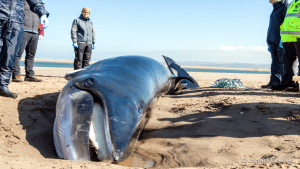
Across the UK, whales, dolphins, porpoises, and seals have frequently been found stranded on coasts. The reasons behind these stranding are not always straightforward and the role that human activity can have on causing these strandings is under investigation. The Scottish Marine Animal Stranding Scheme (SMASS) has been in operation since 1992. It is part of the Cetacean Strandings Investigation Programme (CSIP) and is funded by the Scottish and Westminster governments. The project aims to provide a systematic approach to the surveillance of Scotland’s marine species by collating, analysing and reporting data of all whales, dolphins and porpoises seals, marine turtles and basking sharks that strand on the Scottish coastline. The collection of this data allows for improved understanding of the health status of these species and reveals information about the potential risks they are facing.
This project saw SMASS renovate an appropriate facility that would support marine strandings investigation work in the Highlands and Island and to develop and update the environmental monitoring app ‘Beachtrack’, which facilitates the collection and use of high resolution data on marine strandings and other key metrics of marine environmental health around the Scottish coastline.
In 2022 SMEEF was able to provide a grant of £224,495 to support this work using resources from the Nature Restoration Fund.